Electric vehicle adoption in British Columbia is accelerating faster than in almost any other North American market. As a licensed electrical contractor serving Surrey, Langley, Delta, Burnaby, and the rest of the Lower Mainland, we install Level 2 home EV chargers every week — and we get the same questions each time. This guide answers all of them.
"A properly installed Level 2 charger delivers roughly 25–30 miles of range per hour of charging — enough to fully replenish most vehicles overnight from a typical end-of-day battery level."
Level 1 vs Level 2 vs DC Fast Charging — What's the Difference?
Most EVs come with a Level 1 charger (a standard 120V plug). It's functional in an emergency, but it adds only 3–5 miles of range per hour — charging a fully depleted 80-kWh battery takes over 60 hours. That's impractical for daily use.
Level 2 chargers use a 240V circuit (the same voltage as a dryer or range) and deliver 10–60 km of range per hour depending on the unit and vehicle. A full charge from near-empty typically takes 4–10 hours — perfectly suited for overnight charging.
DC fast charging (Level 3) delivers much faster results but requires commercial-grade infrastructure. It's not a residential option and is typically overkill even for commercial fleet applications unless you're operating a dedicated charging depot.
For the vast majority of Surrey homeowners and small businesses, Level 2 installation is the right choice.
Does Your Panel Have Capacity for a Level 2 Charger?
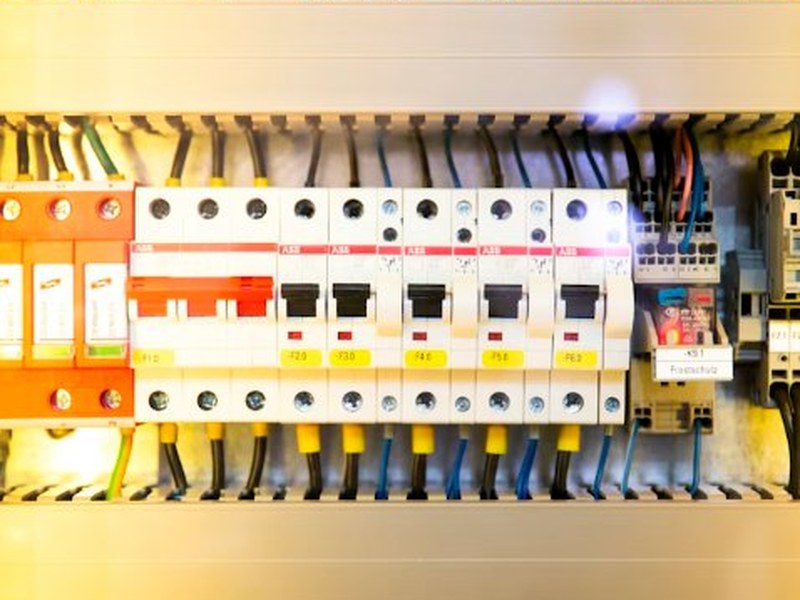
A Level 2 EV charger on a 240V/40-amp circuit draws up to 9,600 watts continuously. Whether your existing panel can support this depends on your current service size and load.
- 100-amp service: Very common in homes built before 1990. May not have spare capacity, especially with electric heat, a hot tub, or other large loads. A panel upgrade to 200-amp service is often required.
- 200-amp service: Standard in most homes built after 1990. Usually has adequate capacity for a 40-amp EV circuit, though we always calculate the existing load before confirming.
- 200-amp+ or sub-panels: Condos, townhomes, and strata buildings may need electrical system modifications coordinated with the strata council and BC Hydro.
We conduct a free load calculation as part of every EV charger consultation. Don't assume your panel has capacity — let us verify before you purchase equipment.
Permits and Inspection: What's Required in Surrey
Any 240V electrical installation in BC requires a permit and inspection by BC Safety Authority (BCSA). This applies to all Level 2 EV charger installations without exception.
The permit process in Surrey typically involves submitting a permit application to the City of Surrey's Building Division, completing the work to BC Electrical Code standards, and passing a final inspection by a BCSA Safety Officer.
At Pinewood Electrical, we handle the permit application on your behalf. You don't need to deal with the city or BCSA — we manage the paperwork, schedule the inspection, and ensure everything passes the first time.
BC Hydro CleanBC Rebates for EV Chargers
BC Hydro's CleanBC program offers rebates for Level 2 EV charger installation — currently up to $350 for residential customers and higher amounts for eligible multi-unit residential buildings and commercial properties.
To qualify, the installation must be completed by a licensed electrical contractor (which we are), and the equipment must meet specific requirements. We ensure every installation we complete is eligible for available rebates.
Rebate amounts and programs change periodically. Contact us and we'll confirm the current rebate amounts available at the time of your installation.
Choosing the Right EV Charger
There are dozens of Level 2 charger brands on the market. Here's what actually matters when choosing one:
- Amperage: Most home chargers operate at 32–40 amps. A 40-amp unit (delivering ~9.6 kW) will charge faster than a 32-amp unit and future-proofs you for vehicles with higher onboard charging capacity.
- Smart features: WiFi-connected chargers let you schedule charging during off-peak hours (cheaper electricity), monitor usage, and receive remote alerts. Worth having if you plan to track consumption.
- Cable length: A 7.5m (25 ft) cable gives you flexibility in parking position. Don't underestimate how useful this is day-to-day.
- Weatherproofing: If the charger is installed outdoors or in an unheated garage, confirm the unit is rated for Canadian winter temperatures (commonly tested to -40°C).
- Certification: Look for UL or CSA/ETL certification. We only install certified equipment.
We're brand-agnostic — we'll install the charger you choose, or recommend one based on your vehicle, budget, and installation situation.
What the Installation Process Looks Like
A typical Level 2 EV charger installation at a single-family home in Surrey takes 2–4 hours. Here's what the process involves:
- Site assessment — panel location, parking position, wire run distance
- Load calculation — confirming available panel capacity
- Permit application — submitted to City of Surrey and/or BCSA
- Wire run — from panel to charger location, through walls or exterior conduit as needed
- Circuit breaker installation — dedicated 40-amp double-pole breaker in your panel
- Charger mounting and connection — tested for correct voltage and polarity
- BCSA inspection — scheduled and passed before project closure
- BC Hydro rebate documentation — provided if applicable
How Much Does EV Charger Installation Cost in Surrey?
Costs vary depending on the complexity of the wire run, whether a panel upgrade is required, and the charger itself. As a general range:
- Simple installation (short wire run, existing panel capacity): $500–$900 installed, not including equipment
- Complex installation (long wire run, conduit, finished space): $900–$1,600 installed
- Installation requiring panel upgrade: Add $1,800–$3,500 for the panel upgrade
- Charger equipment: Quality Level 2 chargers typically run $300–$800
Every project is different. The best way to get an accurate number is a free site assessment — we'll give you a firm quote before any work begins.
"We never start work without a written quote. No surprises on cost, scope, or timeline — that's a commitment we make to every client."
EV Charger Installation in Condos and Strata Buildings
Installing a charger in a strata building adds complexity. You'll typically need strata council approval, may need to coordinate with BC Hydro for sub-metering, and the electrical work may need to be integrated with common-area systems.
We have experience navigating strata EV projects in Burnaby, Surrey, and Vancouver. We can provide documentation for your strata application and attend council meetings if needed.
Ready to Install Your EV Charger?
We serve homeowners, strata buildings, and commercial properties throughout Surrey, Langley, Delta, Burnaby, Vancouver, White Rock, Coquitlam, New Westminster, Richmond, and Abbotsford.
Contact us for a free consultation. We'll assess your panel, confirm rebate eligibility, and provide a firm quote — typically within 24 hours.